social media

“Don’t Look At Me!” – Twitter and “off the record”

This is starting to become quite the epidemic for communications professionals.  Not all communications professionals, but those who still insist on operating in the pre-2.0 mindset of a centralized command and control structure.  These people still think they can dictate the terms of engagement to the social media-sphere.  The actor in question this time is Matt Farrauto, the former N.M. Democratic party head honcho and currently working as a communications professional on Capitol Hill.

In an exchange with myself and with the Albuquerque Journal’s Washington Bureau chief Michael Coleman, Farrauto claimed we didn’t get his point about not commenting on his Tweets.  They were off the record – he said so.

Specifically, Farrauto put up a sentence on his Twitter account stating that all of his “musings” are off of the record.  It’s like standing in the middle of a room of people, some of whom are his friends and others of whom are reporters, and shouting at the top of his lungs, then not expecting the reporters to write about any stupid things he said. Right, I really see reporters giving up that kind of control.
Continue reading

social media

It’s Twitterific! A lesson from ESPN

Bird in farmland bush, May 1972
U.S. National Archive

Today I was driving back to work from lunch with some of the members of the new NMPRSA board and listening to ESPN radio. The host of the show was talking about athletes who are on Twitter, and the potential of these athletes to “leak” confidential team information. (firings, new players, etc.) SEC fans found out the dangers of Twitter earlier this year when Tennessee football coach Lane Kiffin tweeted the name of a recruit who had might signed with a team – a violation of NCAA rules.

One of the points the host (whose name I can’t remember right now) talked about the problems he saw with athletes preempting team announcements about fired personnel, cut players (especially before the players found out) and the like – and asked how long it would be until players were accidentally – or staffers were purposefully – pulling a Kiffin and violating some kind of rules structure.

So I sent out a tweet mentioning the topic and got a couple of interesting responses back. First from Albuquerque PR firm owner Tom Garrity:

@desertronin , interesting tweet on ESPN and their percieved “danger”. Team owners should be embracing twitter, not fearing it.

And a follow up by blogger and online journalist Matt Reichbach:

@tg123 @desertronin but athletes should use common sense on what to tweet and what not to tweet. (e.g. things that haven’t been announced)

This reminded me of the recent cluster-tweets I’ve talked about before. Sometimes people don’t realize that Twitter is not just a communications tool between friends, but between you and (up to) hundreds of thousands of their closest “friends.” Any one of which can resend their tweet, or take one tweet out of context. (See above link)

Not to mention how many of them might be reporters, especially if you’re a celebrity. And then the story’ll take off. For fun, replace team with “your company” and athlete with “an employee.”

Now, stop hyperventilating at the thought, take a deep breath and go get a stiff Old Fashioned. Feel better? Great!

So what’s to be done?

Continue reading

blogging, social media

Posting Social Media with the NM Independent

Below is my comment to a story on Twitter and a recent social media roundtable by the New Mexico Independents’ most excellent writer and Tweet-head, Gwyneth Doland. Here’s her post with a lot of really good points, and below are my two cents…

Hey Gwyneth!

These are some great tips. I’d add that there are a lot of social networks mentioned here (Facebook, Twitter, etc) and those are great to communicate with, but they tend to build the foundation of like-minded people (whether customers/clients, or organizations, non-profits, etc) that you need to follow up with via other communications tools. Things like blogs, podcasts and the like are still great, low-to-no cost ways of creating content that you can communicate your own message with.

And speaking of blogs, you or your organization needs to have a “home base” for all of your social media efforts, someplace that (for lack of a better phrase) I call a “Grand Central You”. A place where people can go for all of the shiznit you have to share, and for that I recommend people use blogs. Especially with a free service like WordPress.com where you can collect your tweets, RSS any podcasts, share your company’s brilliance and embed video. Facebook is another way to do this, but I look at Facebook as a way to drive more people (again from that social networking foundation) to your messages (blog, YouTube, etc).

Video is also very important. You talked about webcasting, and mashing that with a liveblog is a great way to build community and discussion. But beyond that, video is a very powerful tool for social media content creators to communicate with. Whether it’s a video news report about your own company (as long as a VNR is considered to be from your company, and posting it on your blog, with your YouTube account it should be obvious) to downloadable content for people to create their own videos with, or people using their Webcams to tell their story, video is a great way to go. SWOP was doing this for a while with their media updates, I don’t know why they stopped them.

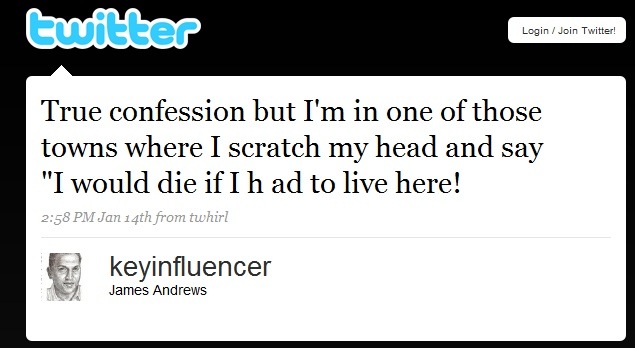
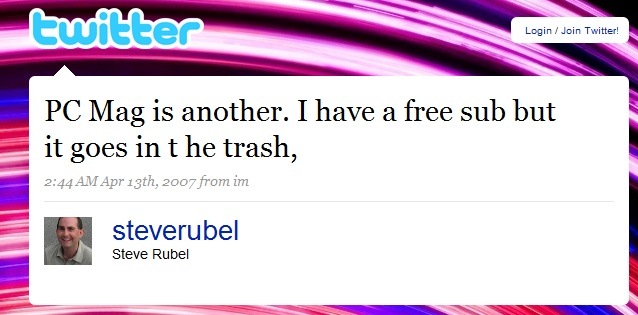
While a nice tool and a great way to crowdsource and communicate, remember that Twitter is a double-edged sword. I’m dunno if you guys remember the James Andrews/FedEx and prior to that the Steve Rubel/PC Mag cluster-tweets from the recent past. As they showed, 140 words is enough to give your company and clients a serious self-inflicted wound. I won’t waste y’all’s space here, but I talk about it in a couple of places:

Here

And here

(For the most recent tweet problem in the world of sports, look up Lane Kiffen Twitter in Google news or ESPN)

Another thing to consider is that many of these items mentioned are tools. There needs to be a change in the “top-down control” mindset of many communications professionals. We’re in the realm of collaboration and conversation, not control. How can I develop trust with my clients without being didactic in the way I communicate with them?

And as a follow up, how can I tap into the network of people who are supporters/purchasers/etc to improve my end product? It’s the idea of the “networked mind,” that while two heads are better than one, 20 heads are better than two, and 2,000 are even better. You can get the best ideas from your customers on what they would like to see in v.2.0 of your product/campaign/etc.

(I know I’m jumping around right now and I apologize, but it’s getting late and I wanted to get this down before crashing, I’ll try to expand on this more tomorrow/later today. What can I say? I love social media.)

And as a second follow up – for PR, marketing and advertising professionals, you have to change your mindset of who the media is. Social media combined with computing advances have removed the barrier to content creation not only for yourselves but for anyone covering you. Nowadays anyone with a $249 netbook, a Flip Video camera, a cell phone camera and a WordPress site is essentially a member of the media (that includes you, your organization and your PR people). They have questions, they want answers… heck, they want respect from us. If you can’t get them the answer they need, have the professional courtesy to tell them so and treat them with respect.

Leverage existing technologies to create your own social networks. Check out Ning to look at creating your own social network (One of the cool things about DCF is how they seamlessly moved (from an outside perspective) from a group blog to city blog to now its own social network). Does your organization need that kind of narrower social network? Ask Barack Obama, but keep in mind they hired one of the minds behind Facebook to create my.barackobama.com.

Don’t forget you have to give your message authenticity. You can’t post press releases as “blog posts” or put them on Facebook. If people want to read that stuff they will go to your online newsroom. (you do have one of those, right?) People want to think that they are interacting with a real person, not a PR flack faking it. If you’re a PR flack and admit it, I don’t think there’s a problem because people know up front. (more on this later, I know I’m throwing a lot of spaghetti against the wall here)

One more quick tip, one of the must have tricks in my toolbag (sorry, running out of steam) – check out HARO. PR guru Peter Shankman’s Help A Reporter Out (http://www.helpareporter.com/). He started it as a Facebook group and it quickly grew beyond the max capacity for Facebook and he turned it into an email list. Three times a day you get an email of topics that reporters need experts for. The great thing is that the reporters send him the queries. And if you’re a reporter, you can send in a query and get responses from all over the world if you want. The best thing about HARO: it’s free.

Social media monitoring is also very important. Not just for your company, but for your competitors and your industry. For example, I work in higher ed at UNM. My Tweetdeck has searches up for “UNM,” “NMSU,” and “#highered”. Plus you can use Google Searches for those terms to keep track of not just what’s being said in the news but also in the blogosphere about your organization and topics of interest. If you have $ for social media, then check out Radian6, Pursuant or AwarenessInc for your monitoring needs.

Always be looking for the next technological innovation. Today it’s Facebook and Twitter (but a lot of the cool kids are already gravitating towards lifestream aggregators like FriendFeed, or using their blogs as that central launching base – check out Chris Brogan, www.chrisbrogan.com), but yesterday it was Friendster and Ryze. (anyone remember Friendster?)

I’m fried, I haven’t even gotten to RSS aggregators, media snacking, collaborative work with competitors and my Robert Scoble example. I’ll spare y’all now but if you want more, I‘d be happy to share.

G’night John Boy.

Benson (@desertronin)

albuquerque, Politics

Guest Post: Mad Dog Casey Rides Again – Politics and Bogus 501c3s

A guest post on the current 501c3 bogusosity in New Mexico politics, by my friend, who wishes to remain anonymous and goes by the pen name “Mad Dog Casey.”

True Believers,
 
It’s time to dust off the cape and spandex and break out the nonprofit ninjitsu–after many long years of silence, MadDogCasey rides again to combat the misinformation spewed forth by the leftist, er, progressive blabosphere

First, to you whiny activists who believe that you can violate IRC 501(c) by actively campaigning for or against specific political candidates and then calling it “free speech”–piss off!  You know you’re wrong, so quit trying to hide behind the First Amendment. It’s absolutely clear that you’d like your cake and ice cream too, but that’s not how it works in the bright shiny world of the federal tax code.

Now for those of you saying, “Screw you Mad Dog! You don’t know what the hell you’re talking about!” Let me take you back to school–Ninja style.

When New Mexico nonprofit corporations apply for and receive tax-exempt status under 501(c) from the IRS, it provides some great benefits, but there are several strings attached–particularly when it comes to political communications like direct mail campaigns and canvas efforts to unseat an incumbent lawmaker. Hmmmmmm. I’ll bet that sounds familliar to some of you rubes. Here’s the MadDogCasey breakdown on what most nonprofits can and can’t do according to the IRS.

501 (c)(4) organizations–often called issue advocacy groups and referred to by those in the know as shadow pacs–are allowed to send out campaign literature, to speak on issues, and engage in political campaign and lobbying work–they have to be careful in terms of what they can do in support of or against specific candidates, but there aren’t a lot of restrictions. As far as nonprofits go, 501(c)(4)s have the greatest amount of freedom when it comes to political speech. Here’s the major drawback: Although 501(c)(4)s can fund raise, donations to those groups are not tax-deductible. As a nonprofit ninja master, I can tell you that if donations aren’t tax-deductible, supporters don’t like to open their checkbooks.

Now most of us are familiar with the important work that 501(c)(3)s do: youth services, affordable housing, animal shelters and humane societies, care and support of the disabled, etc.  Here’s what they are not allowed to do: political communications and campaign work for or against specific candidates. Now they can address issues that affect their constituents, but typically, no more than 10 percent of their budgets can be spent on lobbying and issue advocacy. Furthermore, when it seems that all a 501(c)(3) organization is doing is political work, then something is wrong. In the case of a few NM nonprofits that campaigned against Shannon Robinson in the primary election last year, it resulted in spankings from the NM Attorney General Gary King, and backlash legislation this year from the Legislature.

Most other nonprofit organizations have to follow similar rules laid out for the 501(c)(3) organizations. BTW the reason for the communication restrictions lie in the fact that public charities and private foundations are public entities that use public money for their work–much like government agencies, which aren’t allowed to use their funds to campaign for or against elected officials either. 

The one possible psuedo-exception to the above are churches. During last year’s election cycle, churches on the far right preached politics from the pulpit and claimed that they not only had a free speech right to do so, but that their speech was protected under religious ground. Now this isn’t a real exception–yet. The right-wing activist churches knew they were breaking the law, but their purpose is to challenge the tax code in court.

Frankly I agree with the attorney general’s actions regarding the organizations that banded together to take out Shannon Robinson. He reclassified them into their appropriate catagories (501(c)(4) or 527)–if a nonprofit public charity or private foundation engages in substantive political campaign work it needs to reclassify as a 527 (PAC) or a 501(c)(4)–period. 501(c)(3) organizations receive huge benefits–exemptions from property tax, gross receipts tax, and tax-deductible donations just to name a few. In exchange for these perks, the organizations agree to abide by the rules of conduct established in the federal tax code, which are explicit when they say something like this: “Yea verily thou shalt not engage in politicking, and if you do, thou shalt face dire consequences. So there!”

MadDogCasey is the nom-de-plume of an award-winning journalist, public relations practitioner and nonprofit ninja master.  

Here endith the lesson.

public relations, social media

Like it or not, bloggers are reporters too

One of my job duties, in addition to working on content creation (blogs, YouTube, etc) and writing stories for the university newsletter, is handling press calls.  I really like dealing with the press, especially out here because I get along with so many of them, including the local bloggers. I can hear some of your now:

Bloggers?  You have to deal with bloggers?

Yeah.  And I’m always working to get answers to their questions, or send them information about what’s going on around campus without forcing them to jump through additional hoops that the members of the traditional media don’t have to deal with.  Many bloggers covering your organization want to be given the same treatment and respect that you will give other members of the mainstream media.

Back when social media was called “new media” it was being heralded as a new way for people to engage in civic journalism – turning average people into journalists.  Now those people are taking advantage of these tools to write about their own communities, loves, and hates.  As PR professionals, we have to be ready to treat them like any other journalist, because you never know when that one blog post you didn’t respond to will be the one that the NY Times journalist will read and base a story around.

For those of you who haven’t read The Long Tail yet, run – do not walk – to read this book.  One of the concepts I came away with was the idea that a blog post can travel up the Long Tail graph, from a blog with relatively few readers, to one read by thousands or hundreds of thousands of people a day with a few link referrals.

Instead of blowing off these bloggers, even those who disagree with you, think about engaging with bloggers.  Answer their questions when they send them to you.  Send them information via Twitter – no hard sell, just a quick tweet asking if they would be interested in XYZ.  Follow them and pay attention to what they say before you need to contact them for anything.  Engage with them, on their terms first (via their blogs) and then on your blog after you develop it.

What do y’all do to engage these new reporters?  Have you held an event for bloggers only?  Is this something you’d be interested in?

public relations, social media

Organizational Evangelism, or “Darwin’s Bulldog 2.0”

Thomas Huxley, “Darwin’s Bulldog”

Recently I’ve been talking with my friends about an idea that business guru Guy Kawasaki has been at the forefront of for many years, the idea of “product evangelism” or utilizing your biggest supporters to positively promote a product or organization (i.e. Apple’s iCabal).

Following up on this thought, you should look at how to develop your company’s/industry’s supporters into a cohesive “pack” (for lack of a better word) that is willing to support and defend your company.  Non-profit coalitions have been doing this for quite a while, and businesses can learn quite a bit from these organizations.  Many non-profits, if not almost all of them, have spent decades doing more with less when it comes to communications and coalition-building.  What these groups lacked in financial strength, they made up for in passion, perseverance, strategy and volunteerism.

Continue reading

internet, public relations

When does what "you" say interfere with who "YOU" are in PR?

Recently I (and quite a few other people) wrote about the recent Twitter-gate post of Ketchum VP James Andrews. As I’ve explained already, I thought it was a mistake, and if he had a problem with where he was, he should have given constructive criticism. However, he was there to share his knowledge of social media with FedEx employees and his Twitter post got turned upside down before the end of the day. It sucks, and he got a bit of the raw end of the media dished at him.

As usual there is more than one side to a story, and Mr. Andrews gives his side of it here. This is a learning exercise for all of us on the importance of counting to ten before speaking when angry (to paraphrase Thomas Jefferson), but as my fiancee says when I screw up, “No one died, move on.”

So we are moving on to a question that’s been bouncing around my mind for a while. When you’re working in public relations, where is the line between the “public YOU”, that is connected to your business or clients, and the “private you,” where you’re allowed to have personal opinions and viewpoints that might not always be sweet and nice but shouldn’t cost you your livelihood?

When I was working at a former gig, a memo floated down from on high, stating that we were not allowed to write anything for any electronic outlets, or we’d be fired. I was told this included blogs (hence the reason I blogged under a pseudonym for many years). Since I wasn’t a writer, I didn’t know if that applied to me, but as an employee, anything I wrote, even on my own time, appeared to be held to this standard. (in fact a friend of mine got suspended a couple of weeks without pay for writing something for an online-only outlet).

Regardless of where you work, when you are off of the company time and dime, should you be forced to take Ari Fleisher’s advice to Bill Maher and “Watch what you say?” This is especially prevalent in public relations, the field that thousands of us toil in daily. We are seen not only as employees, but due to our profession, representatives of our respective companies. (or as in the case of Mr. Andrews’ Twitter-gate, representative of not only his firm, but also the companies we represent)

As people in PR talk about “Brand You,” the idea that what you write/podcast/etc. is connected to the “you” brand, discussion is moving closer towards the idea that the “you” brand, and the “YOU” brand are interconnected – allowing your employer to connect to and impose upon your online/social media persona. If these two brands are interconnected, then everyone must be careful about what they post, whether privately or for their employer, as the perception is these actions somehow reflect their employer.

On the other side of the equation, corporate America needs to change enough to realize that people are people. They are going to react to things that happen to them. If you watch CNN’s iReport or FoxNews’ YouReport pages, people have taken on the mantle of citizen journalists in a big way, and are reporting news in a pixel instant, because seconds have become too long now. Social media (previously called “new media”) now allow anyone to write anything anytime.

By recognizing the importance and influence of communicating through social media outlets like Twitter, employers will go a long way in providing their companies with the key element it needs to succeed in the social media-sphere: a personality.

What do you think? Agree? Disagree? In this new media world of 24-hour iReporting and the all-day media cycle, should PR people be forced to represent their organizations 24-7?

Edit: Peter Himler has a great post, and an interview with Edelman’s Social Media maven Steve Rubel here.

public relations

Anything You Say Can be Used Against You in the Court of PR

So what is it with PR professionals and Twitter? Sometimes we feel like a nut, and sometimes we don’t?

James Andrews, a vice president for Ketchum PR, one of the top PR agencies in the country, posted a quick tweet to his peeps about his first impression of Memphis, where he was visiting a little company they were doing some PR for, you might have heard of it, it’s called FedEx. It turns out, Andrews was less than impressed.

whoops2

An employee for FedEx (the client in question) read the tweet, and this led to a memo to Mr. Andrews, his bosses at Ketchum, and some higher-ups at FedEx, essentially stating what he thought of Mr. Andrews’ opinion of his fair town. Peter Shankman posted the memo at his blog, which is well worth checking out. (if you don’t have his blog on speed dial already) Then the story was picked up by Gawker, who immediately took the whoopin’ stick to PR with Gawker-esque style. The title says it all: “Flackery: PR Person Excoriated for Telling Truth.”

My first thought after reading this at Peter’s blog was “Wow, how far down his virtual mouth did he end up shoving that boot?” It was very reminiscent of Steve Rubel’s Foot in Mouth disease back in 2007 when he upset the editorial staff at PC Magazine with a bit of his own brilliant insight.

Rubel Whoops

Ouch.

I started wondering at these two statements and the reaction they created, pro and con. Each one was less than 140 characters, but had the ability to impact a company’s relationship (or in Rubel’s case many companies with one media outlet) with the PR firm they have entrusted with creating their image, online and offline. As usual with cases like this, there is more than meets the eye. That’s one of the strengths of the conversations on Twitter (you can quickly get the gist of what the writer is saying in 140 characters) but also one of its biggest weaknesses (if you’re not following the conversation for several tweets, you are going to end up taking things out of context). That’s what happened here. With Rubel, the tweet was not intended as a slam on PC Magazine, but more a matter of what he reads online vs. reading in print. But you won’t know that if you weren’t following the conversation.

Mr. Andrews (I feel like I should have on some black shades and a black suit when I say that, and be a computer created program in a virtual life but that’s for another time) was probably just sharing his thoughts with a group of people he considers his “friends,” but he forgot one of the most important rules on Twitter, all of your statements are archived and Google searchable. What’s worse is he was going to FedEx to speak about Social Media, which means he was directing the same people whose town he was smacking to check out what he said about their town. But again, he probably thought he was just talking with his “friends” and as the old rugby saying goes, “no blood, no foul.” Twitter can get your like that, you’re involved in the conversation, and the next thing you know, “oh my gosh, I didn’t really mean to blurt that out, did I?” It’s too easy to slip into that mode of “chilling with my peeps.”

Since 2007, Rubel’s tweet has proven useful in my handful of presentations about what to be aware of when using social media for PR. In that one statement, and the response it received from PC Magazine’s editor, damage was done not only to Rubel and Edelman, but to all of the clients that Edelman might want to pitch to PC Magazine. In Andrews’ case, the damage was done directly to the client-agency relationship between Ketchum and FedEx. I’m sure it was, as many things on Twitter tend to be, a momentary thought and nothing more. But to the people at FedEx and Memphis, it meant a lot more. Memphis, like most town (even Albuquerque) have their social media savvy defenders who will bite back if they feel their home has been maligned. (One of the things I’ve seen in Social Media is a growth, or reemergence, of community pride, whether that pride is in a town, organization, or hobbyists).

There have been detractors of the person who emailed Andrews, his bosses and the higher-ups at FedEx, saying he should not be so thin-skinned, he should act like an adult, blah blah blah. While this might be true, Andrews, a PR professional, should have known that whatever he says online will probably be connected back to his firm and onto his clients.

This also led me to another question, one that I will address shortly. When you work in PR, does it automatically mean that you have to surrender your opinions at the door? Are you, and anything you ever blog, tweet or video record, linked to your employer?

Update: Chris Brogan has an interesting discussion going on at his place.

(H/T: Peter Shankman)

public relations

TechCrunch and Embargoes. What’s the problem?

I’ve been reading about Michael Arrington (the guru behind TechCrunch) and his decision to no longer honor embargoes asked for (demanded?) by PR professionals when certain stories are sent to TechCrunch.  This has apparently caused quite an uproar in certain quarters of the PR community, with comments flying back and forth on the post at TechCrunch and throughout the Blogo/Twito/Globo-Sphere, with people picking sides.

The first thing that hit me was how this sounded like Gina Trapani’s wiki where she whipped out the ban-hammer and listed the PR companies that she got tired of spamming her personal email address and gave people a quick and easy way to include these companies (5WPR, Ogilvy, Edelman, etc) in your spam filter. There were a lot of big PR companies being called out, and a few New Media PR companies that appear to have been caught in the wake of e-blasting out stories that people don’t want to read.

The following thought was, PR people still use embargoes?  Seriously?  I mentioned this to a co-worker last week and she asked the same thing.

Embargoes were usually used to give news companies (alleged) “exclusives” or dictate to a media outlet when they could run with a story.  Big surprise, they only succeed at pissing off journalists/media outlets while getting ignored part of the time anyway.  Then you get pissed, and they get more pissed, and it spirals down from there.  And unless you’re a company crucial to a media outlet’s coverage, or large enough to have an impact if you decide to stop sending info their way (like Microsoft, Apple, Ford, Google, etc), then the media outlet doesn’t need to change the way it does business.  You do.

Reporters and editors, especially of New Media outlets, wouldn’t care if most of the companies out there stopped sending them press releases.  In fact, all of them would probably start popping open the bubbly in celebration.  When I was still working at the local newspaper, I was in charge of manning the fax machine (yeah I’m dating myself a little bit here) in addition to my regular duties.  In my time at the paper, less than a dozen releases ever made it past the trash can.  Most of the people the sports department (where I worked) reporters spoke with already had personal relationships with the writers (coaches, players, sports info officers) and knew to contact them personally and didn’t need the fax waste.

Contrast that to when I was working at my first PR firm, on the other side of the “send” key.  We’d invested in some “media relations” Web site, with a database of thousands of reporters and (allegedly) how to get in touch with them, forms set up to enter your own press releases and the potential to blast them to thousands of reporters, whether they wanted your information or not.  I watched as one pitch went out to over 2,300 business reporters all over the U.S. (Somehow I don’t think the farm business reporter from the “Peoria Pittance Proper” really cared about the NYC client’s pitch)

When you use these pitch-fest programs, you don’t have to know any of the media outlets you are e-blasting.  You don’t have any personal relation with the reporter you want to get interested in your stuff.

That’s what a lot of PR now a days is missing.  Public relations is kind of a misnomer for what needs to be done.  It needs to be called “Personal relations”.”  Too many PR professionals, especially when pitching nationally, are still depending so much on these databases or yellow books of media contacts.

Please, my fellow PR peeps, if you are going to use one of these databases to pitch a story nationally, at least make sure the person you are calling a) covers the area you think they do, and b) wants to receive your email.  Chances are they don’t. And then you’re making the rest of us look bad.

Push vs. Pull

A lot of PR needs to start shifting from the idea of pushing press releases to some kind of “narrowcasting,” creating meaningful content for your specific target audiences that they can then pull to their desktop/email/browser.  It’s the difference between forcing your message onto someone or getting to know them and letting them be genuinely interested in your information.  Your audience probably won’t be as big as you’d like – but the media landscape has been shifting from large distribution channels to many more, but smaller, means of communicating to your target demographic. (think about the difference between network TV and cable – while network TV has a larger audience, you can better target a narrow audience by selecting a cable channel that matches your audience needs (food network, SciFi, etc) and tailoring your messages to match not only your audience, but that specific channel.

And finally, for those PR people complaining about Mr. Arrington or Ms. Trapani’s actions.  Remember, TechCrunch and LifeHacker are their media outlets, they get to decide how they want to run them.